Table of Contents
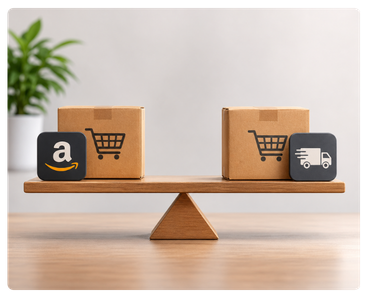
Choosing between Amazon Easy Ship and Self Ship depends on how much control an eCommerce seller wants over order fulfilment, shipping costs and delivery operations. Amazon Easy Ship allows sellers to store and pack products while Amazon manages pickup and delivery, whereas Self Ship gives sellers complete responsibility for arranging their own shipping through third-party courier partners or delivery teams.
Both options help sellers fulfil Amazon orders, but they differ in operational responsibilities, flexibility, shipping costs and delivery management. Understanding these differences can help online retailers choose a shipping method that supports their business requirements, product categories and growth plans.
What Is Amazon Easy Ship?
Amazon Easy Ship is a shipping and delivery programme that allows Amazon sellers to manage inventory and packaging while Amazon handles shipment pickup and last-mile delivery.
Under this model, sellers store products at their own warehouses, prepare orders for dispatch and schedule pickups through Amazon Seller Central. An Amazon Logistics delivery associate collects the packages and delivers them to customers.
Key Features of Amazon Easy Ship
- Pickup from seller’s location: Amazon arranges shipment collection from the registered pickup address.
- Delivery management: Amazon handles transportation and delivery to the customer.
- Order tracking: Customers can track their shipments and view delivery updates.
- Pay on Delivery: Eligible orders can offer cash or card payment at delivery.
- Packaging flexibility: Sellers can use their own packaging or Amazon packaging materials.
- Returns support: Amazon provides return-handling options, subject to applicable policies.
Amazon Easy Ship Services are particularly suitable for sellers who have their own storage facilities but prefer not to manage courier operations independently.
What Is Amazon Self Ship?
Amazon Self Ship is a fulfilment option in which sellers manage the complete shipping process after receiving an order on Amazon.in. Sellers store inventory, pack products, arrange courier pickups and ensure that shipments reach customers.
Unlike Easy Ship, Amazon does not arrange the delivery carrier for Self Ship orders. Sellers can work with third-party logistics companies or use their own delivery personnel.
Key Features of Self Ship
- Courier flexibility: Sellers can select their preferred courier partners.
- Greater operational control: Businesses manage pickup schedules, shipping arrangements and delivery processes.
- Shipping price control: Sellers can configure shipping charges according to their business requirements.
- Customised delivery operations: Businesses can develop delivery arrangements based on their locations and customer requirements.
- Own logistics network: Sellers with established delivery infrastructure can use existing resources.
For sellers with experience in logistics management, amazon easyship and Self Ship represent two different approaches to managing marketplace deliveries. Self Ship is particularly useful for businesses that want greater independence over their shipping operations.
Amazon Easy Ship vs Self Ship: Key Differences
The primary difference between these fulfilment methods is who manages transportation and delivery. The following comparison highlights their major differences.
| Comparison Factor | Amazon Easy Ship | Self Ship |
| Inventory storage | Seller | Seller |
| Packaging | Seller | Seller |
| Shipment pickup | Amazon arranges pickup | Seller arranges pickup |
| Delivery responsibility | Amazon | Seller |
| Courier selection | Amazon’s delivery network | Seller’s choice |
| Shipping management | Managed through Amazon’s process | Managed by the seller |
| Pay on Delivery | Available for eligible orders | Not generally available under standard Self Ship |
| Delivery control | Limited seller control | Greater seller control |
| Best suited for | Sellers wanting simplified delivery operations | Sellers with established logistics networks |
Both options require sellers to maintain inventory and prepare orders for dispatch. However, Self Ship requires additional involvement in courier selection, shipment tracking and delivery coordination.
What Are the Advantages of Amazon Easy Ship?
Amazon Easy Ship simplifies delivery operations by allowing sellers to focus on inventory management, product quality and order preparation.
Its major advantages include:
1. Simplified shipping operations
Sellers do not need to independently negotiate with courier companies or arrange transportation for every eligible order. Amazon coordinates pickup and delivery.
2. Access to Amazon’s delivery network
Sellers can use Amazon’s logistics infrastructure to reach customers across supported serviceable locations.
3. Convenient order tracking
Customers can access shipment tracking and delivery information through their Amazon accounts, improving delivery visibility.
4. Pay on Delivery options
Eligible Easy Ship orders can offer customers Pay on Delivery, which supports purchasing preferences among shoppers who prefer paying when their products arrive.
5. Reduced logistics management
Businesses can spend less time coordinating with multiple courier partners and focus more on daily marketplace operations.
What Are the Advantages of Self Ship?
Self Ship offers greater flexibility to sellers who want to manage their own delivery operations and build independent shipping strategies.
1. Freedom to choose courier partners
Sellers can compare courier companies based on delivery coverage, service quality, pricing and shipment requirements.
2. Greater control over shipping costs
Businesses can evaluate different courier rates and negotiate arrangements based on their shipment volumes and operational needs.
3. Customised delivery solutions
Businesses can arrange specialised delivery services for fragile, oversized or location-specific shipments, subject to courier capabilities and Amazon’s applicable requirements.
4. Better control over local deliveries
Retailers with their own delivery teams can serve nearby customers through customised delivery schedules and local fulfilment arrangements.
5. Flexibility to manage shipping operations
Businesses can develop their own processes for shipment handling, courier coordination and delivery monitoring.
How Should eCommerce Sellers Choose Between the Two?
The right shipping method depends on business size, delivery requirements, available resources and logistics experience.
Consider the following factors before making a decision:
- Choose Easy Ship if you have storage and packaging facilities but do not want to manage courier coordination.
- Choose Self Ship if you already work with reliable courier partners or operate your own delivery network.
- Evaluate product requirements if you sell heavy, bulky or specialised products that may have shipping restrictions.
- Compare total shipping costs rather than considering only the courier charge. Include packaging, handling, return and operational expenses.
- Assess delivery coverage to ensure your chosen shipping method can serve your target customers.
- Consider order volumes because growing shipment volumes may require more structured logistics management.
For example, a small fashion seller processing orders from a home-based warehouse may prefer Easy Ship because Amazon manages transportation. However, a retailer operating multiple warehouses and maintaining courier partnerships may find Self Ship more suitable.
Sellers should also remember that these options are not necessarily mutually exclusive. Amazon allows eligible sellers to use both methods, subject to account settings and product eligibility.
How Can Shipping Platforms Support Self Ship Operations?
Managing Self Ship orders becomes more demanding as businesses expand their product range, order volumes and delivery locations. Sellers must coordinate courier bookings, monitor shipment movement and manage delivery exceptions.
A technology-enabled shipping platform such as RapidShyp can be considered as part of a broader logistics strategy when evaluating ways to organise shipping operations across sales channels. Before selecting a platform, sellers should assess its supported integrations, courier options, tracking capabilities and operational requirements.
For businesses using multiple delivery partners, a structured shipping workflow can help improve shipment visibility and make courier performance easier to evaluate.
Conclusion
Amazon Easy Ship and Self Ship serve different eCommerce fulfilment requirements. Easy Ship is suitable for sellers who want Amazon to manage pickup and delivery, while Self Ship offers greater control over courier selection, shipping arrangements and delivery operations.
Before choosing, evaluate your order volumes, product categories, delivery locations, logistics resources and overall shipping expenses. The right approach is the one that supports efficient fulfilment while maintaining a reliable customer delivery experience.
Frequently Asked Questions
1. What is the main difference between Amazon Easy Ship and Self Ship?
Amazon Easy Ship allows sellers to store and pack products while Amazon manages pickup and delivery. With Self Ship, sellers manage the entire shipping process using their own courier partners or delivery teams.
2. Is Amazon Easy Ship better than Self Ship?
Neither option is universally better. Easy Ship suits sellers who prefer simplified delivery management, whereas Self Ship is more suitable for businesses with established courier partnerships and greater control over logistics operations.
3. Can sellers use both Amazon Easy Ship and Self Ship?
Yes, eligible Amazon.in sellers can use both fulfilment methods, depending on their account settings and product eligibility. This allows businesses to select different shipping methods for different orders.
4. Does Amazon charge sellers for Easy Ship?
Yes, Amazon charges Easy Ship weight-handling fees. The applicable charges depend on factors such as shipment weight, size and seller programme level. Sellers should check the latest fee structure in Seller Central.
5. Can I choose my own courier partner for Amazon Self Ship?
Yes. Self Ship allows sellers to arrange deliveries through their preferred third-party courier companies or their own delivery associates, subject to Amazon’s shipping and tracking requirements.


Calculate Your Shipping Rates

| Courier Partner | Mode | Chargeable Weight (KG) | Shipping Rates |
|---|