Table of Contents
Just because a customer clicks “Place Order” doesn’t necessarily mean a sale has been completed. The selected payment option can impact many factors after an order, including how quickly cash flow is received, the success of an order delivery, and the likelihood of an RTO. For an eCommerce business, the choice of payment option offered can affect the bottom line of the company.
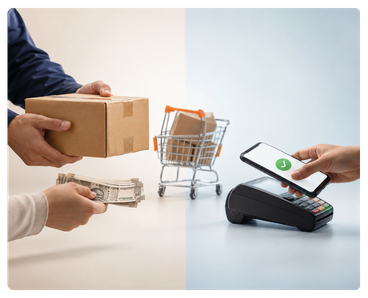
COD payment option allows customers to make a payment at delivery, whereas the choice of a prepaid option provides businesses with more certainty of payment and ease of fulfillment. The completion of an online payment may be the most important factor to some customers; however, they also want to balance payment and delivery risks. Prepaid payment options have become increasingly convenient and quick. Offering customers simpler ways to pay makes prepaid payments more attractive and increases usage.
In this blog, we will analyze both payment options and highlight the main pros and cons of each. We aim to help you determine the best course of payment options for your business. We will also examine ways to mitigate the risks of COD and RTOs.
What Is Cash on Delivery (COD)?
Cash on Delivery (COD) is a method of payment in which the customer pays the merchant when the shipment is delivered as opposed to paying during the checkout process. COD is a preferred payment option for the shy online purchaser, especially for shoppers in areas where digital purchasing and cashless payment are less common.
For businesses, cash on delivery minimizes hesitation on the part of the customer to purchase, as it enables the customer to pay after they receive the ordered item. However, it also increases operational risk with more order cancellations, failed deliveries, cash collection becoming a challenge and a greater likelihood of Return to Origin (RTO). This means that for businesses to continue to be profitable with higher order volumes, effective management of cash on delivery is essential.
What Is Prepaid Payment in eCommerce?
Prepaid payment involves customers paying for orders in their entirety during checkout using UPI, credit/debit cards, net banking, or digital wallets. After payment, businesses are enabled to work on order processing, as payment at the time of fulfillment is not necessary.
For businesses, prepaid payment greatly minimizes the risk of order delivery refusal owing to payment-related causes and improves fulfillment as the payment is received before processing of the shipment. However, many customers are still in favour of COD, especially when there is a lack of trust in a brand or a lack of willingness to make an online payment.
COD vs Prepaid: Pros & Cons
Both payment options can support eCommerce growth, but they also come with trade-offs. Understanding these advantages and limitations can help businesses decide how much emphasis to place on each mode.
Cash on Delivery: Pros
Higher Customer Confidence
COD allows customers to place an order without making an upfront payment. This can be particularly useful for new brands trying to build trust with first-time shoppers who may be reluctant to pay before receiving the product.
Lower Purchase Barrier
Some customers prefer paying only when the order reaches them. Offering COD can reduce checkout hesitation and help businesses capture customers who might otherwise abandon their purchase.
Useful for New Customer Acquisition
For brands entering new markets, COD can make it easier to attract customers who are unfamiliar with the business and want additional assurance before paying.
Cash on Delivery: Cons
Higher RTO Risk
Customers may refuse or cancel an order at the time of delivery, resulting in an undelivered shipment. These failed deliveries increase logistics costs and can negatively affect margins.
Delayed Cash Flow
Businesses receive payment only after successful delivery. High COD volumes can therefore delay access to revenue compared with prepaid transactions.
Additional Operational Complexity
COD shipments require payment collection and reconciliation. Failed delivery attempts and cash-handling processes can add additional workload for businesses and logistics teams.
Prepaid: Pros
Greater Payment Certainty
Once the transaction is completed, businesses don’t need to collect payment at the doorstep. This provides greater certainty that the order has already been paid for.
Lower Delivery Risk
Since payment has already been made, customers are less likely to reject an order specifically because they don’t want to pay at delivery. This can help reduce RTO-related losses.
Faster Order Processing
Payment confirmation allows businesses to move orders into fulfillment without waiting for COD verification or confirmation, helping streamline the overall shipping process.
Prepaid: Cons
Higher Trust Requirement
Customers must pay before receiving the product. This can create hesitation when purchasing from unfamiliar brands, particularly when there are concerns about product quality, returns, or delivery reliability.
Potential Checkout Drop-Off
If customers strongly prefer paying at delivery, removing COD entirely can lead to abandoned carts and lost conversions.
Greater Dependence on Payment Experience
A complicated or unreliable checkout can discourage customers from completing prepaid transactions. Businesses need secure, simple, and convenient payment options to maximize conversions.
Which Payment Mode Is Better for Your eCommerce Business?
In the COD vs prepaid payment strategy debate, there is no ultimate winner. The right payment strategy depends on several factors such as customers, product category, the order value, the target location, and the maturity of the business.
For businesses with high first-time customer volumes, COD is a good option for reducing purchase apprehension. Businesses should track the cancellation rates of COD, RTOs, and delivery, as these may well end up increasing the logistics cost burden.
Prepaid payment becomes more effective for high-trust repeat customers. Payment solutions that ensure quick payment, such as discounts, free shipping, and loyalty schemes, can be very effective.
Offering a combination of payment options is the best approach for most eCommerce businesses. Conversions, payment preferences, RTOs, and profitability should all be evaluated based on customer segments and their locations. From this analysis, one can decide where payment by COD is more appropriate and where more prepaid payment transactions are beneficial.

How to Reduce COD Risks and RTOs
Just because you choose to offer COD doesn’t mean you have to accept higher RTOs. Businesses can make COD orders more dependable by introducing simple checks and ordering incentives.
Verify COD Orders
Order confirmations via OTP, WhatsApp, SMS, or phone calls should be mandatory for orders of high value, or orders that seem suspicious. Confirming customer intent before shipping can help you determine whether an order was made accidentally or with fraudulent intent.
Validate Customer Addresses
Incorrect addresses can result in shipments being returned to you. Verifying addresses and having contact information on file can help reduce avoidable RTOs.
Encourage Prepaid Payments
Offering your customer a small reward in the form of a loyalty discount or free shipping can encourage prepayment. Even a little shift from COD to prepayment can reduce the risk of payment-related delivery issues.
Set Smart COD Limits
Setting COD limits can help businesses restrict COD eligibility for orders above a certain value, encouraging customers with high-value orders to choose prepaid payment.
Keep Customers Updated
Notify the customer when the order is confirmed, dispatched, out for delivery and delivered. Order status updates help reduce delivery uncertainty and improve delivery success rate.
Choose Couriers Based on Performance
Courier performance can be wildly different in different regions. Courier performance and cost should be considered jointly, as delivery success of a service should not be compromised on price.
Track COD Performance
Measuring indicators related to COD conversion, cancellation, delivery success rate, percentage of Return to Origin (RTOs) and shipping cost helps identify high-risk regions/customer segments and improve the COD payment strategy.
Conclusion
Payment selection impacts more than just the checkout experience. It impacts conversion, cash flow, fulfillment efficiency, delivery success and ultimately the cost of acquiring and serving the customer.
COD is a payment method that helps businesses address the hesitancy that customers may have for completing purchase commitments, and it also reaches customers who prefer payment on delivery. Meanwhile, prepaid transactions help merchants achieve greater payment certainty, which often translates to a lower fulfillment risk.
Rather than letting one payment method completely dominate the other, businesses should determine customer behaviour, the economics of the product and delivery performance, and strike the right balance.
A data-driven payment strategy enables businesses to retain the conversion advantages of COD while encouraging more prepaid transactions where it makes economic sense. With the right strategy, payment flexibility can shift from a risk to a competitive advantage.
Frequently asked questions (FAQs)
Which of the two payment methods is better for eCommerce, COD or prepaid?
There is no clear winner. COD can help increase conversion for customers with purchase hesitancy, while prepaid transactions can bring greater payment certainty and lower delivery risk.
1. Why do eCommerce companies offer COD?
COD helps build customer trust, which in turn decreases purchase hesitancy, especially with first-time buyers.
2. How can COD RTOs be minimized?
COD orders can be verified, delivery updates can be made, reliable delivery partners can be chosen, delivery incentives can be offered, and customers can be encouraged to choose prepaid payment.
3. Are prepaid orders more secure for businesses?
Order prepayment ensures payment is made before goods are dispatched, eliminating delivery failure due to payment. However, businesses need working fulfillment, shipping, and returns systems.
4. How can businesses get shoppers to opt for prepaid?
Discounts, free shipping, loyalty offers, and fast checkout can persuade customers to choose prepaid over cash-on-delivery (COD).
5. What is quick pay in eCommerce?
Quick Pay refers to a faster payment experience that helps customers complete prepaid transactions with fewer steps during checkout.


Calculate Your Shipping Rates

| Courier Partner | Mode | Chargeable Weight (KG) | Shipping Rates |
|---|