Table of Contents
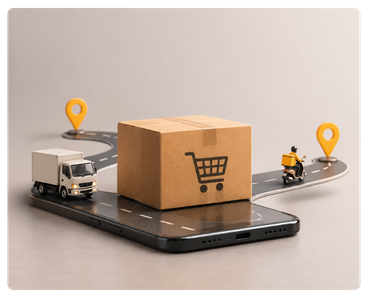
The eCommerce delivery process involves multiple transportation stages, each playing an important role in getting an order to the customer. The first mile covers the movement of a shipment from the seller’s warehouse to the first logistics facility, while the last mile refers to its final journey from a local delivery hub to the customer’s address.
Between these stages, shipments move through sorting centres and distribution hubs before reaching their destination. Any delays or coordination gaps during transportation can affect delivery timelines and the overall customer experience. Reverse logistics also plays a role when a shipment needs to be picked up from a customer and returned.
Understanding how first-mile and last-mile transportation work helps eCommerce businesses identify operational gaps, improve shipment movement and create a more reliable delivery process.
What Is First-Mile Transportation in eCommerce?
First-mile transport refers to the movement of an order from a seller’s warehouse, store or fulfilment centre to the first logistics facility. It is the physical transport of the order after it has been processed and packed.
Let’s take an example where a customer places an order on a D2C website. The seller processes the order, packs the product and schedules a courier pickup. The courier collects the package and takes it to a sorting or distribution centre.
An efficient first mile helps businesses reduce dispatch delays and improve coordination between warehouse teams and courier partners.
The success of first-mile delivery depends on several factors, including warehouse readiness for courier pickups, scheduling, shipment volume, courier partner availability, the distance between the seller’s location and the logistics facility, and the time of day.
What Is Last-Mile Transportation in eCommerce?
Last-mile transportation is the final stage of the delivery journey that moves a shipment from a local distribution centre to the customer’s preferred location. It is the stage in which the order reaches the customer.
Take the example of an online fashion store. When a customer in a different city orders clothes from the store, the package moves through a sorting centre and then to a regional hub. From there, it reaches a local delivery centre, where a delivery executive collects it and takes it to the customer.
Last-mile delivery services help businesses shorten their delivery windows, reduce the number of unsuccessful delivery attempts and increase shipment visibility.
Several local factors influence last-mile delivery performance, including traffic, delivery density, customer availability and route planning. Compared to long-distance transport, these factors influence how quickly and effectively orders are delivered.
How Do First-Mile and Last-Mile Transportation Differ?
Although both stages contribute to successful order fulfilment, their responsibilities and operational requirements are different.
| Comparison Factor | First-Mile Transportation | Last-Mile Transportation |
| Main purpose | Moving shipments from sellers to logistics facilities | Delivering shipments to customers |
| Starting point | Seller’s warehouse | Local delivery hub |
| Destination | Sorting centre or logistics hub | Customer’s doorstep |
| Key activities | Pickup scheduling and shipment handover | Route planning and delivery attempts |
| Major challenges | Pickup delays and warehouse readiness | Traffic and incorrect addresses |
| Business impact | Influences dispatch efficiency | Influences customer satisfaction |
The first stage ensures that shipments enter the logistics network on time, while the final stage determines how effectively they reach customers. Businesses need to manage both to maintain a consistent delivery experience.
How Does First-Mile Transportation Impact the eCommerce Delivery Experience?
First-mile transportation determines how quickly an order moves from the seller’s warehouse into the logistics network. Even when an order is processed and packed on time, delays in courier pickup or shipment handover can affect its overall delivery timeline.
Three factors have a direct impact on first-mile efficiency:
1. Dispatch and Pickup Timelines: Delays in scheduled courier pickups can increase the time between order processing and the shipment entering the logistics network. During festive seasons or major sale events, high order volumes may create dispatch backlogs. Ensuring that packages are ready before the scheduled pickup window helps reduce these delays.
2. Warehouse and Courier Coordination: Once an order is packed and labelled, it needs to be handed over to the courier partner. Coordination between warehouse teams and courier personnel helps ensure that shipments are ready for collection and picked up as scheduled. Poor coordination can lead to missed pickups, repeated follow-ups and delays in dispatch.
3. Operational Efficiency: Inefficient pickup planning can create congestion at warehouses, particularly when businesses handle large shipment volumes. Sellers need to monitor pending pickups, identify recurring bottlenecks and coordinate dispatch activities accordingly. Delays at this stage can affect subsequent transportation and reduce the time available for the remaining delivery journey.
An efficient first-mile process helps shipments enter the logistics network on time, giving them a better chance of progressing through the remaining stages within the expected delivery window.
How Does Last-Mile Transportation Affect Customer Satisfaction?
Last-mile transportation influences how customers perceive an eCommerce brand because it is the final stage of the delivery journey. Even if a shipment moves efficiently through the earlier stages, a delayed or unsuccessful final delivery can leave customers dissatisfied.
Some key factors that influence the customer experience include:
- Delivery reliability: Customers expect their orders to arrive within the estimated delivery window. High delivery volumes, traffic congestion and inefficient route planning can affect schedules and lead to delays.
- Shipment visibility: Customers want to know where their orders are and when they can expect delivery. Timely shipment updates and notifications about delivery attempts help reduce uncertainty and unnecessary customer service enquiries.
- Successful delivery attempts: Communication gaps, customer unavailability and incorrect addresses can result in failed delivery attempts. Accurate address details and timely communication can help reduce these issues.
- Brand perception: The final delivery experience can influence how customers view a brand and whether they choose to order from it again.
Consistent delivery performance and clear communication help build customer trust and confidence.
What Challenges Affect First-Mile and Last-Mile Transportation?
Both stages face operational challenges that can affect shipment movement, delivery costs and customer experience.
Common first-mile challenges include:
- Missed pickups: Courier delays can prevent shipments from entering the logistics network on time.
- Warehouse inefficiencies: Incomplete packing and incorrect shipping labels can slow down dispatch.
- High shipment volumes: Festive sales and promotional campaigns can create pickup backlogs.
- Location limitations: Remote warehouse locations may have limited courier availability.
Last-mile operations face a different set of challenges, including traffic congestion, inaccurate delivery addresses, customer unavailability and limited delivery capacity. Delivering individual packages across different locations also requires effective route planning to manage transportation costs.
Identifying these issues helps businesses understand where delays originate instead of focusing only on the final delivery status.
How Can eCommerce Businesses Improve Delivery Efficiency?
Businesses can improve transportation efficiency by establishing organised dispatch processes, selecting suitable courier partners and maintaining visibility throughout the shipment journey.
Here are five practical approaches:
1. Establish a structured pickup process: Coordinate warehouse activities with courier schedules. Packages should be packed, labelled and ready before the collection window.
2. Choose suitable courier partners: Evaluate courier companies based on their serviceability, pricing, delivery performance and ability to handle specific shipment requirements. Working with multiple courier partners can also provide flexibility across different regions.
3. Improve address accuracy: Collect complete customer addresses, PIN codes, landmarks and contact details. Address validation during checkout can help prevent avoidable delivery issues.
4. Monitor shipments regularly: Use tracking systems to identify pending pickups, transit delays and unsuccessful delivery attempts. Timely monitoring allows businesses to address problems before they escalate.
5. Analyse shipping performance: Track important metrics such as pickup turnaround time, average delivery time, first-attempt delivery rate and return-to-origin rate. Reviewing these indicators helps sellers identify operational gaps and improve logistics planning.
How Can RapidShyp Help Businesses Manage Shipping Operations?
Managing orders, selecting courier partners and monitoring shipments can become increasingly complex as an eCommerce business grows. These activities are especially important during the first and last mile, where delays in dispatch or unsuccessful delivery attempts can affect the overall customer experience.
RapidShyp helps eCommerce businesses manage these shipping activities through a technology-enabled platform. Its capabilities support different parts of the shipping workflow:
- Automatic Order Import: Orders are automatically imported from connected sales channels, reducing the need for sellers to enter order details manually before creating shipments.
- AI-Recommended Courier Allocation: RapidShyp provides AI-recommended courier allocation to help sellers identify suitable courier options based on their shipping requirements.
- Shipment Creation Through Ayumi Sense: Sellers can create shipments through Ayumi Sense as part of their shipping workflow.
- Shipment Tracking: Sellers can monitor shipment movement and follow delivery progress across the logistics journey.
- Automated NDR Management: RapidShyp supports automated Non-Delivery Report (NDR) management, helping businesses manage shipments where a delivery attempt has been unsuccessful.
These capabilities support shipping operations at different stages. Automatic order import and shipment creation help organise the dispatch workflow, while courier allocation supports courier selection. Shipment tracking and automated NDR management help sellers monitor delivery progress and manage last-mile exceptions.
The physical pickup and delivery are carried out by courier partners. RapidShyp supports the technology and operational processes that help sellers manage these activities more efficiently.
Conclusion
First-mile and last-mile transportation are connected stages of the eCommerce delivery process. The first mile determines how efficiently shipments enter the logistics network, while the last mile determines how successfully they reach customers. Delays or inefficiencies at either stage can affect delivery timelines, operational costs and customer satisfaction.
For eCommerce businesses, improving delivery performance requires better coordination across dispatch, courier selection and shipment monitoring. A structured shipping process, supported by the right technology, can help sellers identify operational gaps and manage delivery exceptions more effectively.
RapidShyp supports this process through automatic order import, AI-recommended courier allocation, shipment creation through Ayumi Sense, shipment tracking and automated NDR management. These capabilities help businesses organise their shipping workflows and manage shipments across different stages of the delivery journey.
Frequently Asked Questions
1. What is the difference between first-mile and last-mile delivery?
First-mile delivery moves shipments from a seller’s warehouse to the first logistics facility. Last-mile delivery moves shipments from a local delivery hub to a customer’s address.
2. Why is first-mile transportation important in eCommerce?
It moves processed orders into the logistics network efficiently. Delays in first-mile delivery can slow down the movement of goods to customers and affect the expected delivery date and time.
3. Why is last-mile transportation challenging?
Deliveries involve multiple locations and individual customer addresses. Last-mile delivery is made difficult by traffic, inaccurate addresses, customer availability and the number of delivery stops.
4. How can last-mile delivery failures be prevented?
There are several ways to minimise last-mile delivery failures, including using technology to manage and track deliveries, improving route planning, and coordinating deliveries with suitable courier partners.
5. How does technology impact eCommerce transportation?
Technology helps address challenges in eCommerce transportation and logistics by reducing the need for manual planning and coordination. Cloud-based delivery management platforms support real-time tracking and shipment visibility.
6. Does use of multiple courier partners improve delivery?
Yes. Using multiple courier partners gives eCommerce businesses flexibility to cover more serviceable areas and meet a wider range of customer requirements.


Calculate Your Shipping Rates

| Courier Partner | Mode | Chargeable Weight (KG) | Shipping Rates |
|---|