


Table of Contents
The first time a brand ships a large order, logistics feels deceptively simple. The product is packed. A carrier is assigned. A delivery date is selected. For many new sellers, this moment feels like the final step; once the shipment leaves the warehouse, the hard work is over.
But logistics rarely end at dispatch. Somewhere between the origin hub and the destination warehouse, sellers have no visibility on shipments at the last mile. Among them, one status tends to cause disproportionate concern: “Scheduled Delivery Pending.”
It appears without warning or explanation. And for sellers experiencing it for the first time, it raises immediate doubts about reliability, reputation, and control.
Yet in B2B logistics, this status is far more common and damaging than it appears. Understanding what it truly means, why it occurs, and how to respond thoughtfully can turn a stressful moment into a defining demonstration of professionalism.
Understanding Scheduled Delivery Beyond the Label
Scheduled delivery is often misunderstood as a premium or guaranteed service. In reality, it is better described as a coordinated commitment between the seller, the logistics provider, and the receiver. Unlike standard deliveries that move continuously through a carrier’s network, scheduled deliveries are designed to arrive at a specific location at a set time. This timing is not chosen casually. It aligns with warehouse dock availability, manpower planning, storage constraints, and internal workflows at the destination.
For B2B buyers, this coordination is essential. An unscheduled arrival can be as disruptive as a delayed one. Trucks may be turned away. Goods may sit idle. Costs may increase due to a delivery reattempt. Scheduled delivery, therefore, becomes a tool for operational efficiency rather than mere convenience.
For sellers, agreeing to a scheduled delivery is a signal of seriousness. It indicates readiness to operate at a professional, predictable scale.
The Invisible Complexity Behind Scheduled Delivery
While scheduled delivery appears straightforward from the seller’s dashboard, the logistics engine powering it is complex and constantly adapting.
Once a shipment is booked, carriers begin planning its journey with precision. Orders are grouped based on destination clusters. Vehicle capacities are optimized to reduce partial loads. Delivery sequences are mapped to ensure that time windows are respected.
Inventory readiness plays a critical role. Any mismatch between planned shipment and actual stock availability can ripple through the schedule. Traffic forecasts, regional restrictions, weather patterns, and historical performance data all influence route planning.
What sellers often don’t see is that a scheduled delivery is rarely planned in isolation. It exists within a network of other scheduled shipments, each dependent on the successful execution of the previous one.
This interconnectedness is what makes scheduled delivery efficient, and what makes it vulnerable to disruption.
What “Scheduled Delivery Pending” Actually Indicates
When a shipment status changes to Scheduled Delivery Pending, it does not imply failure or loss.
It means that the delivery could not be completed within the originally planned time window, and the carrier is reassessing when it can be delivered next. Importantly, the shipment remains within the logistics network and under the carrier’s control.
This status often appears during transitional moments, when a vehicle reaches a hub late, when unloading slots are missed, or when operational constraints prevent immediate rescheduling.
In essence, the system is signalling that the original plan has been paused, not abandoned.
Why Scheduled Deliveries Become Pending
Logistics planning assumes ideal conditions. Execution rarely enjoys them.
High shipment volumes during festive seasons or end-of-quarter rushes can overwhelm even well-prepared networks. Vehicle availability may become constrained. Delivery hubs may operate beyond capacity.
Environmental factors also play a role. Heavy rainfall, fog, heatwaves, or regional disruptions can slow movement and reduce driving hours. Regulatory checks and compliance inspections may delay transit unexpectedly.
Destination-side challenges are equally common. Warehouses may face manpower shortages. Dock congestion can force vehicles to wait. Appointment slots may be missed due to earlier delays in the delivery sequence.
These factors rarely originate from seller error, but they directly affect seller outcomes.
Why First-Time Sellers Feel the Impact More Strongly
Experienced sellers have seen enough delays to recognize patterns. New sellers haven’t.
For someone shipping their first large or time-sensitive order, a pending status feels like a personal failure. It triggers fear of losing credibility, refunds, or long-term business.
This emotional response is natural. Early-stage sellers often equate operational disruptions with reputational damage. What they haven’t yet learned is that buyers evaluate sellers not on the absence of problems, but on the quality of response when problems occur.
The Cost of Silence During a Pending Status
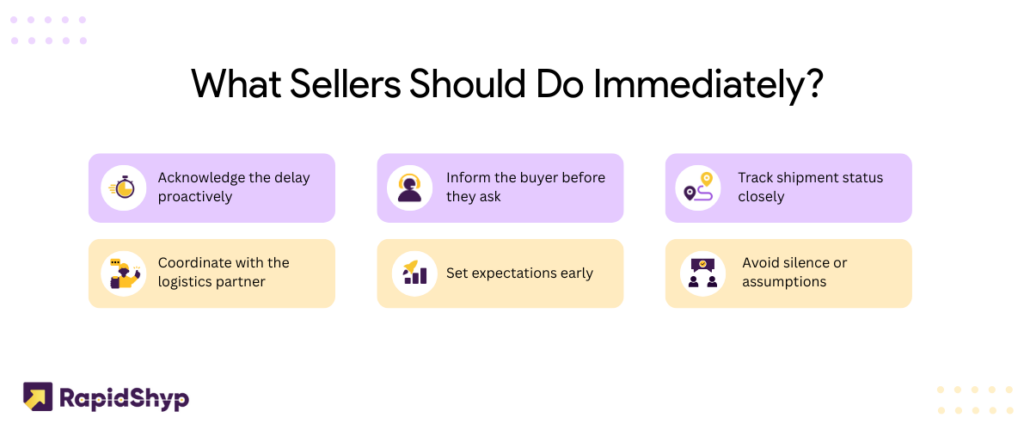
The most damaging response to a scheduled delivery pending status is inaction.
When buyers notice delays before sellers acknowledge them, trust erodes quickly. Even short delays can feel significant when communication is absent.
Silence forces buyers to speculate. Speculation leads to frustration. Frustration escalates into conflict.
Proactive communication, even without complete information, interrupts this cycle.
Reframing the Seller’s Role During Delays
The moment a delivery goes pending, the seller’s responsibility shifts.
At this stage, the seller is no longer just a supplier of goods. They become a coordinator, an interpreter of logistics updates, and a point of reassurance for the buyer.
This role is especially important in B2B relationships, where delays can impact downstream operations. A seller who communicates clearly during uncertainty demonstrates reliability far beyond transactional fulfillment.
Setting Expectations Without Overpromising
One of the most common mistakes sellers make during delays is overconfidence.
Promising immediate resolution without confirmation often leads to further disappointment. A better approach is to explain what is known, what is being investigated, and when the next update will be shared.
Providing a revised estimated delivery date, even if tentative, helps buyers plan contingencies. Clarity, even imperfect clarity, is preferable to optimistic silence.
When Escalation and Alternatives Are Necessary
Not all delays are equal.
When a pending delivery threatens production schedules, retail launches, or contractual commitments, sellers must consider escalation. This may involve working with the logistics provider to reroute shipments, upgrade service levels, or adjust delivery modes.
In some cases, sellers may need to absorb additional costs to preserve relationships. These decisions, while difficult, often define long-term partnerships.
The Strategic Role of Apology and Accountability
An apology in logistics is not an admission of incompetence. It is an acknowledgement of shared inconvenience.
Expressing regret for the disruption, even when external factors are involved, signals empathy. Buyers are more willing to remain patient when they feel their challenges are understood.
Accountability does not mean assigning blame. It means taking ownership of communication and resolution.
Learning From Each Pending Status
Once the shipment is delivered, the incident should not be dismissed.
Reviewing the timeline helps identify vulnerabilities. Was the buffer sufficient? Was the carrier appropriate for time-bound delivery? Were expectations clearly set at the outset?
Each delay offers insight into how systems, partners, and processes can be improved.
How Structured Logistics Platforms Reduce Uncertainty
As sellers scale, reactive logistics management becomes unsustainable.
Platforms like RapidShyp Cargo+ help sellers introduce predictability into complex B2B shipping environments. Features such as real-time tracking, appointment-based deliveries, and data-driven carrier allocation reduce the likelihood of missed schedules.
More importantly, these tools give sellers visibility early enough to act—before a pending status becomes a relationship issue.
For new sellers, this visibility builds confidence and operational maturity.
Why Scheduled Delivery Pending Is Part of Growth
Encountering a scheduled delivery pending status is not a setback. It is a milestone.
It indicates that the seller is operating within a level of logistics complexity where coordination matters. How sellers respond to this moment often shapes how buyers perceive them going forward.
Professionalism is not proven when everything goes right. It is revealed when plans change.
Final Perspective
“Scheduled Delivery Pending” is not a signal to panic.
It is a reminder that logistics is dynamic, human, and influenced by countless variables. Sellers who understand this reality, and communicate accordingly` build resilience into their businesses.
For first-time sellers, especially, learning to navigate this status marks the transition from transactional selling to operational maturity.
In the long run, it is not perfect delivery timelines that define strong sellers, but the ability to adapt, communicate, and deliver trust even when schedules shift.


Calculate Your Shipping Rates

| Courier Partner | Mode | Chargeable Weight (KG) | Shipping Rates |
|---|


