Table of Contents
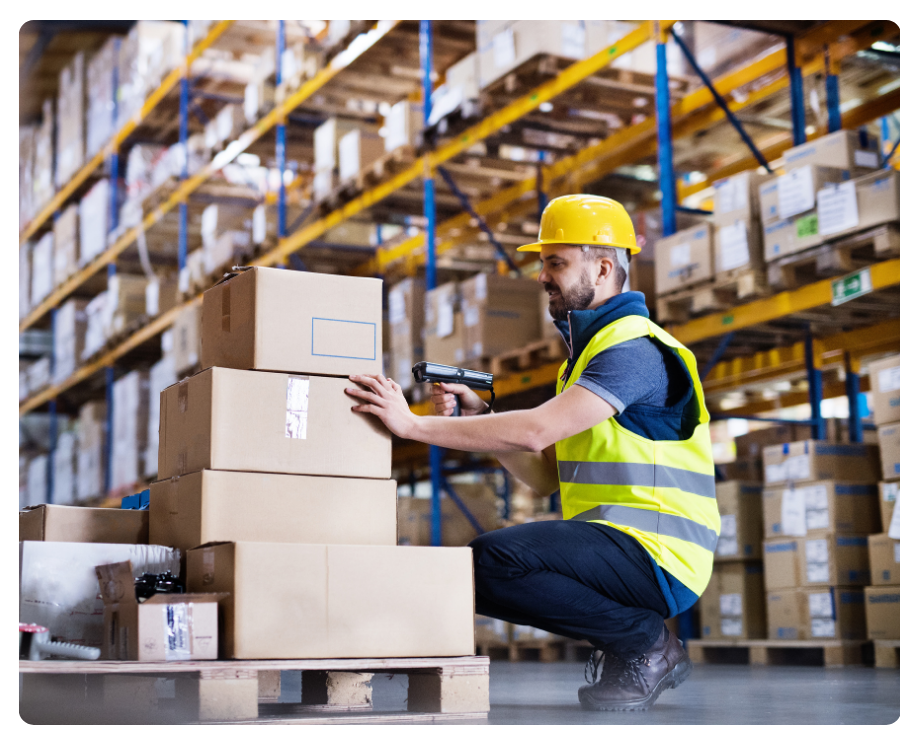
If you zoom out and look at how commerce in India has evolved over the last decade, one thing becomes clear: warehousing is no longer infrastructure; it is strategy.
What used to be a backend necessity has moved to the centre of business performance. Delivery timelines, customer experience, inventory efficiency, and even marketing promises are now deeply tied to how warehousing is designed and executed.
And in 2026, this shift is no longer subtle. India’s warehousing is being reshaped by multiple structural forces that are not just increasing demand, but fundamentally redefining what a warehouse is supposed to do. The result is not an incremental upgrade; it’s a complete transformation of the role warehousing plays in the supply chain.
To understand what’s changing, you need to look at the convergence of five powerful shifts: consumption behaviour, supply chain redesign, manufacturing expansion, technology adoption, and infrastructure maturity.
The Demand Explosion: Why Warehousing Is Scaling Faster Than Ever
The most visible driver of change is the sheer surge in demand, but this isn’t just about volume. It’s about a different kind of demand altogether.
eCommerce in India has moved far beyond early adoption. It is now deeply embedded in consumer behaviour across categories. What’s more important is how expectations have evolved. Two-day delivery is no longer impressive. Same-day is becoming standard. In many categories, especially essentials, even that feels slow.
This expectation shift has completely redefined warehousing requirements.
Warehouses are no longer designed just to store inventory; they are designed to move inventory faster than ever before. This requires proximity to customers, faster processing capabilities, and highly optimised layouts that minimise movement time inside the facility.
Quick commerce has taken this pressure and multiplied it. The rise of 10–30 minute delivery models has introduced an entirely new layer of warehousing- micro-fulfilment centres and dark stores embedded within cities. These are not traditional warehouses. They are high-velocity dispatch hubs designed for speed over scale.
The consequence is a hybrid warehousing network where large regional hubs coexist with hyperlocal nodes. This distributed model is becoming the default in 2026, and it is fundamentally changing how brands think about inventory placement.
The GST Effect: From Fragmentation to Network Intelligence
While e-commerce may be the most visible driver, the structural foundation of modern warehousing in India was laid by the implementation of the Goods and Services Tax.
Before GST, warehousing decisions were driven by tax efficiency rather than operational efficiency. Companies maintained multiple small warehouses across states simply to avoid interstate taxation complexities. The result was a fragmented network that increased costs and reduced visibility.
GST eliminated these inefficiencies by creating a unified national market.
But the real impact is being fully realised now, in 2026.
Companies are no longer just consolidating warehouses- they are re-architecting their entire supply chain networks. Instead of many small storage points, businesses are building fewer but significantly larger, strategically located distribution centres supported by satellite nodes closer to demand clusters.
This shift has enabled:
- Better inventory pooling
- Reduced safety stock requirements
- Faster inter-region movement
- More predictable delivery timelines
Warehousing, in this new model, becomes a network optimisation problem, not just a storage decision.
Manufacturing, PLI, and the Global Supply Chain Shift
Another major force reshaping warehousing is the resurgence of manufacturing in India, largely driven by the Production Linked Incentive Scheme.
PLI has catalysed investments across sectors- electronics, pharmaceuticals, automotive, textiles, and more. But every new factory doesn’t just create production capacity- it creates logistics demand ecosystems.
Manufacturing today operates on tightly synchronised supply chains. Raw materials, components, and finished goods need specialised storage, often with temperature control, compliance standards, and rapid throughput capabilities.
At the same time, global supply chains are undergoing a structural realignment. Companies are actively diversifying beyond China, and India is emerging as a key alternative. This has led to increased foreign direct investment in manufacturing clusters across regions like Tamil Nadu, Gujarat, and Maharashtra.
The ripple effect on warehousing is significant.
Demand is no longer limited to basic storage. It now includes:
- Bonded warehouses for international trade
- Cold storage for pharmaceuticals and food
- High-security facilities for electronics
- Integrated logistics parks near manufacturing hubs
Warehousing, in this context, becomes an extension of the production line, not a separate function.
The Rise of Grade-A Warehousing: Efficiency Over Cost
One of the most defining characteristics of 2026 is the clear shift toward quality over cost.
For years, India’s warehousing ecosystem was dominated by lower-grade facilities that were cheap but inefficient. Poor infrastructure led to higher handling times, product damage, and operational bottlenecks.
That equation has now flipped.
Modern supply chains cannot afford inefficiency. As a result, grade-A warehousing has become the preferred standard.
These facilities are built for performance. They offer higher clear heights, better floor load capacity, optimised docking systems, and layouts designed for automation. They also integrate energy-efficient systems and safety infrastructure that align with global standards.
More importantly, they enable measurable business outcomes:
- Faster order processing
- Lower error rates
- Reduced operational costs over time
This is why companies are willing to pay a premium for better infrastructure. The ROI is no longer theoretical-it’s operationally visible.
Automation and Data: Warehouses Are Becoming Intelligent Systems
Perhaps the most transformative change in 2026 is the shift from physical infrastructure to intelligent systems.
Warehouses today are increasingly powered by:
- AI-driven inventory management
- Real-time tracking systems
- Automated picking and sorting technologies
- Predictive analytics for demand forecasting
This is not just about efficiency, it’s about control.
In a high-demand, high-uncertainty environment, businesses need visibility across their supply chain. They need to know what is moving, where it is, and what will be needed next.
This is where warehousing becomes a data engine.
Modern warehouses don’t just store goods, they generate insights. They help businesses:
- Anticipate demand spikes
- Optimize stock allocation
- Reduce dead inventory
- Improve fulfillment accuracy
The competitive advantage is no longer just physical capacity; it’s decision intelligence.
The Geographic Shift: Beyond Metros to Consumption-Led Expansion
Another major change in 2026 is the geographic spread of warehousing.
While traditional hubs like NCR, Mumbai, and Bengaluru continue to dominate, the next wave of growth is clearly emerging from Tier 2 and Tier 3 cities.
This is being driven by two parallel trends:
- Rising consumption in non-metro markets
- The need to reduce delivery timelines
As demand becomes more distributed, supply chains must follow. This has led to the development of warehousing infrastructure in cities like Jaipur, Lucknow, Coimbatore, and Bhubaneswar.
This shift is not just about expansion; it’s about proximity-led logistics.
The closer the inventory is to the customer, the faster and more cost-effective fulfillment becomes. In a market where delivery speed directly impacts conversion rates, this is a critical advantage.
Sustainability Is Becoming a Competitive Lever
Sustainability in warehousing is no longer a checkbox; it’s becoming a differentiator.
Large enterprises and global brands are increasingly aligning with ESG goals, and this extends to their logistics operations. Warehouses are now expected to support these commitments through:
- Solar energy adoption
- Energy-efficient lighting and cooling
- Water conservation systems
- Green building certifications
But beyond compliance, sustainability is also making economic sense.
Energy-efficient warehouses reduce long-term operating costs. Green-certified facilities attract premium tenants. And environmentally responsible operations enhance brand perception.
In 2026, sustainability is not just good practice; it’s good business.
The New Role of 3PL: From Service Providers to Growth Enablers
As warehousing becomes more complex, businesses are moving away from owning and managing infrastructure themselves.
Instead, they are partnering with tech-enabled 3PL providers who can offer:
- Multi-location fulfillment
- Technology integration
- Scalable infrastructure
- Operational expertise
This shift is particularly strong among D2C and high-growth brands that need flexibility without heavy capital investment.
3PL providers are no longer just logistics partners; they are strategic enablers of growth, allowing brands to expand faster, enter new markets, and deliver better customer experiences without operational bottlenecks.
Read More: How 3PL Warehousing Helps eCommerce Brands Scale Faster
What This Means for Brands in 2026
The future of warehousing in India is not about bigger warehouses; it’s about smarter networks.
Brands that succeed in this environment will think differently about warehousing. They will treat it as a core part of their growth strategy rather than a backend necessity.
They will:
- Position inventory closer to demand
- Invest in technology for visibility and control
- Build flexible, scalable supply chain networks
- Prioritise speed without compromising efficiency
Because in 2026, the competition is no longer just about products or pricing.
It’s about who can deliver better, faster, and more reliably.
Where RapidShyp Fits Into This Future
As warehousing evolves into a high-speed, tech-enabled ecosystem, the gap between traditional logistics and modern fulfillment continues to widen.
This is where platforms like RapidShyp become critical.
By combining distributed warehousing, intelligent checkout and fulfillment controls, and real-time visibility, RapidShyp enables brands to operate with the kind of agility that modern commerce demands. Instead of managing fragmented logistics operations, businesses can leverage a unified system that optimises everything from inventory placement to delivery execution.
In a scenario where speed, accuracy, and flexibility define success, the role of logistics partners is no longer operational; it’s transformational.
Conclusion: The Warehouse Is Now the Growth Engine
The future of warehousing in India is being shaped by forces that are both powerful and irreversible.
E-commerce has changed demand. GST has restructured networks. Manufacturing has expanded supply chains. Technology has redefined operations. And infrastructure is finally catching up.
What emerges from this convergence is a new reality: Warehousing is no longer where goods sit. It is where growth happens.
And in 2026, the brands that understand this will be the ones that lead.


Calculate Your Shipping Rates

| Courier Partner | Mode | Chargeable Weight (KG) | Shipping Rates |
|---|